Showing posts with label Dissertating. Show all posts

[Forgot to Title This Post]

In comments over here, anonymous 8:56 writes:

Hey Smokers, 
I am beginning the first phase of my dissertation research (the topical), and I was wondering if anyone had any specific tips about how to keep track and organize articles, reading notes, etc. and perhaps any tips on how to go about working through a large body of literature. Do you take notes on every article? If so, how much time do you spend summarizing an article? How many articles/chapters do you read per day?  
Thus far, I have been logging everything in a word document, but it's getting out of control...I really need a better (and hopefully less stressful) system 
I really appreciate any advice.

If there's one thing I've learned from the various discussions of research and writing strategies on this blog and others, it's this: there's no one way. I've got things that work ok for me and various anonymouses have things that work for them, but there's nothing anyone can tell you that will be guaranteed to work. Moreover, the dissertation is a learning experience. You're supposed to struggle with it. I know you know all this, but it bears emphasizing. If you knew what you were doing, it wouldn't be a learning experience to do it.

When I'm in reading/research mode, I generally don't compile a formal bibliography or anything like that. Annotated or otherwise. I make use of a couple of bibliography/PDF organization applications, BibDesk and Mendeley (I don't really like Mendeley; I use it because it's free), and I use keywords to help stay organized. But that's about it.

Then I just sort of read, at whatever pace feels right. I start by taking notes in the document itself, be it a book, JSTOR printout, or PDF document, and I start taking more detailed notes in a separate medium only if I can see that the article (or book or whatever) is going to end up being important. But I don't try to read a certain number of things—articles, pages, whatever—per day. I try to give each thing the attention it deserves; sometimes that means breezing through, and sometimes that means spending a week or more on one article.

When I'm dealing with an important article, book, or chapter, I open a .tex file and take notes in it. Depending on where I am in the project, this might be a separate file devoted just to this one article (or whatever), or it might be section in a larger document. Here, I try to articulate the views and the arguments, how the author defends the premises, how the author responds to criticisms, how the material fits into the larger picture, and my own reactions to the material. At this stage I am meticulous about documentation. I quote passages that support my interpretation and cite page numbers. Always cite page numbers. Always. I think about how the material should be organized—I think about what order things should go in. Often, this is not the order in which it appears in the source text. I find that I end up spending a lot of time moving stuff around—I find that I struggle with organizing the ideas more than almost anything else.

At this stage, the distinction between “taking notes” and “drafting” is pretty thin. A lot of the time, I'm taking notes in the actual document I'm writing. However, I still try to be careful in distinguishing between what we might think of as “notes” and what we might think of as “writing”—that is, the very rough “drafty” stuff and the semi-polished stuff that I'm more-or-less satisfied with. (Of course, everything is subject to revision, but some things are more subject than others.) Here I find LaTeX's percent signs to be very valuable. Drafty stuff gets a percent sign with a [bracketed label] indicating why it's percentaged. When the passage is ready for promotion, I delete the percent sign and a new paragraph is born. This also lets me excise material in a slow, noncommittal way. I find that those percent signs get a lot of use.

So, to get back to 8:56's specific questions: I take notes on every article, but often just in the article itself and not necessarily in a separate medium; the amount of time I spend on an article depends on its importance for my project—although I probably wouldn't spend much time summarizing the article, exactly, but would spend whatever time was necessary to summarize the particular arguments or views or whatever that were pertinent; the number of articles/chapters I read in a day depends on the articles and chapters. I don't try to keep summaries of everything in one document; I don't even try to keep summaries of everything.

A dissertation is obviously a big project, and it's obviously going to be difficult to keep track of all your research. So I wouldn't try to keep track of it all in the same place. I'd carve the material up into manageable bits. It is, obviously, customary to organize one's dissertation into chapters, so I'd start there. Maybe organize into sections or subsections if there's a particular chapter that's getting unwieldy. But I suspect that the kind of annotated bibliography 8:56 alludes to, containing all your research for your dissertation, is going to be more trouble than it's worth and will cause you to spend more time than you should on articles and chapters that aren't central enough to your project to be worth it. And, as 8:56 mentions, it will be hard to keep a document like that organized, and so the document wouldn't even be particularly useful.

Anyways, that's what I think. What do you think?

--Mr. Zero

  • Digg
  • Del.icio.us
  • StumbleUpon
  • Reddit
  • RSS

Is your PhD nearing its expiration date?

Over on Leiter's blog, he spotlights a couple of job ads (not in philosophy) where a requirement is a recent PhD (in one case, 2009 or later, in another, 2010 or later). Like this one

Applicants must have received the PhD or equivalent degree in the past three years (2009 or later), or show clear evidence of planned receipt of the degree by the beginning of employment.
So there you have it. Don't bother applying, you loser, if your degree is more than three years old. We'd rather hire an ABD. Also, how stupid of you to graduate during a recession. There's nothing in the ad that says something reasonable like "recent PhD and/or evidence of active scholarship." Nope. Fresh PhDs or ABDs only.

An argument for holding out on defending that diss, if you can, until you've got a job. And also, I guess, avoiding those pesky, time-consuming fellowships. This strikes me as nuts. I mean, I know we've all been told a PhD can get stale. But three years? Two years?! I've got food in my pantry that's older than that.


~zombie

  • Digg
  • Del.icio.us
  • StumbleUpon
  • Reddit
  • RSS

To Bail, or not to Bail...

An anonymous Smoker writes:

I am a 3-n year graduate student at a program in the top 15. I am by no means a star in my program. In fact, it's quite clear that I am one of the weakest among those in my incoming year. Although members of the faculty are confident that I can successfully navigate a dissertation in close consultation with my adviser, these same faculty members are also confident that doing so will be a struggle that is unlikely to yield future employment. Although a lot could change in the next several years, after reading many harrowing tales of the job market on this blog I'm beginning to think I should count my program's paternalism as a blessing. I like philosophy, a lot. Although it is admittedly much harder to like while constantly being reminded that I'm only mediocre at it. I am hoping those Phil Smokers that have found themselves in a similar situation might shed some light on whether to forge on. It's a dark place I find myself in.


It is, obviously, hard to find a tenure-track job in philosophy. Especially now. And it's particularly difficult if the people who are supposed to be your champions, writing letters on your behalf and stuff, aren't behind you 100%. On the other hand, the dissertation period is a pivotal time. It was for me, anyway. You might find that your skills develop a great deal as you work your way through your dissertation project; mine did. So I would advise you to give your dissertation a real try. As long as you believe in what you're doing and feel like you're making progress. And as long as your advisors do, too. (I assume you trust their advice.) If you start to not believe in what you're doing, or don't feel like you're making progress, or your advisors don't think you're making progress, then I would consider dropping out. But I'd give it at least a year.

What say you, Smokers?

--Mr. Zero

  • Digg
  • Del.icio.us
  • StumbleUpon
  • Reddit
  • RSS

Music For Working


I feel like I've touched on this topic before, but I couldn't find where, so what the hell.

I work better if I have music going. But I don't work very well if the music has words I might accidentally get interested in or listen to, so it has to be instrumental music. It also has to be somewhat uptempo--it can't be sad or slow or else I will go to sleep. And it can't be boring or particularly repetitive, for the same reason.

I have tried what uninitiated rubes like me call "classical" music, but I find i am not familiar enough with its traditions or distinctions to weed out the stuff that won't work. I know a few pieces that work for me, but only a few, and so it starts to get repetitive. And in this context, researching the music defeats the purpose.

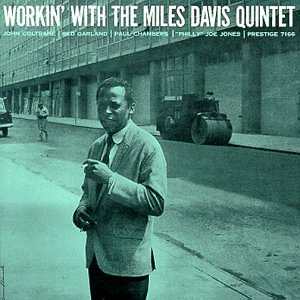
I find that first-quintet-era Miles Davis is about right. The music is generally not slow or boring, and that group (and its cousins) made a hell of a lot of recordings, so there's a lot of variety.

What do the Smokers do?

--Mr. Zero

  • Digg
  • Del.icio.us
  • StumbleUpon
  • Reddit
  • RSS

Dissertation Mining

I recently got to a point in a couple of papers I've been working on where the most appropriate thing was to let them rest for a while and allow the dust in my mind to settle around them. I started thinking about what to work on next, and I thought that maybe the thing to do would be to polish up a key section from my dissertation. The section I'm thinking of is the section I should publish if I don't publish anything else from my dissertation; where I make the central argument for the central conclusion.

One nice thing about this kind of writing is that I've already done most of the legwork. I won't have to do much extra reading to acquaint myself with the literature, or spend much time trying to orient myself within the conceptual space. I've already got a pretty polished "rough draft" to work from. And I've already got a few new ideas about how to strengthen and buttress the argument.

So I'm looking at it, thinking about how to reorganize it, how to structure it, and where to modify or cut text. How the new ideas are going to fit in. And I'm thinking about how boring this is and how much I have no interest in actually doing it. At best, I would like to have already done it. But I don't want to do it. At all.

Don't get me wrong. I'm proud of my dissertation. I think it's a pretty good one. I'm glad I did it. But there's hardly anything in it I wouldn't do at least a little differently if I had to do it over again. As I said before, one of the most stunning things I learned when I was preparing for my defense was how effective dissertating was at making me a better philosopher. But now that I am that better philosopher, I don't much feel like going back and revising that old stuff. Even though I still think I was right. One of the greatest things about not being a dissertator is that I don't have to do it over again.

But then I wonder, does not mining your dissertation send a signal? Or does mining too late send the same signal as mining for too long? Am I in a situation where if I'm going to do it, I had better do it now? Because maybe then I would go ahead and do it now.

--Mr. Zero

  • Digg
  • Del.icio.us
  • StumbleUpon
  • Reddit
  • RSS