Showing posts with label Publishing. Show all posts

How productive is productive enough?

Per the discussion here, how much does scholarly productivity (number of publications, prestige of journals, etc.) matter when it comes to landing a TT job? The answer is not obvious. Or at least, there is not obviously a simple answer.
Carolyn Dicey Jennings' research here is helpful (this is for 2011-2012 data):

Although some hirees have as many as 14 total publications and 7 top-15 publications, the median number of publications is 1 for both tenure-track and postdocs (0 for top-15 publications)
The data for 2012-2013 is here.
2012-2013 tenure-track hirees had a mean 2.22 peer-reviewed publications and 0.49 peer-reviewed publications in a top-15 journal (according to the same top-15 journal list used in 2011-2012: http://the-brooks-blog.blogspot.be/2011/01/top-philosophy-journals-initial-results.html). Postdoctoral hirees had a mean 1.48 peer-reviewed publications and 0.3 peer-reviewed publications in a top-15 journal. The medians for both tenure-track and postdoctoral hirees were 1 peer-reviewed publication and 0 peer-reviewed publications in a top-15 journal. (here)
The data shows the unsurprising fact that the top departments place a lot of their grads. What it shows in terms of publications is that the numbers are all over the place. People were hired with 0 pubs and  with 14 pubs. Pubs in top journals were rare.

Putting on my speculator's hat: the further out you are from your PhD, the worse it will look if you are not publishing. One explanation for this is that you might look like a bad bet for earning tenure if you've been fallow, research-wise, for a few years--worse than a fresh PhD with no pubs. Bottom line: you should be publishing. (Anecdotally, I know of two resignations this year in a single department at my university--both people were in year 5, coming up for tenure, with 0 publications. No books, no papers. You can't get tenure with no publications, unless you're at a school where they absolutely don't care about publishing. [If there are such places.]) This gets me wondering about the issue of PhD "staleness." Is staleness really just a function of your years post-degree, or your level of post-degree productivity, or both? That is, do you still go stale if you publish regularly?

Philosophy departments have their own standards for how much/often you have to be publishing to earn tenure. But you don't have to already be qualified for tenure to get a tenure track job. If there are standards for getting a TT job, the Jennings data shows that the number of publications is not a deciding factor (thus people with 0 pubs get hired, all things considered). The Chronicle has this interesting story (here and here) on two hires (in English), and what it takes to stand out in a crowded field. (Spoiler alert: there are lots of applicants with lots of pubs.)

So, how much will it help you in the job search if you are publishing a lot? And how much is enough?

  • Digg
  • Del.icio.us
  • StumbleUpon
  • Reddit
  • RSS

A Small, Not Particularly Sad Thing, That Nevertheless Has a Minor, Slightly Sad Aspect

I was recently made slightly sad about something. Before I say what it was, I want to emphasize that I'm not complaining. On balance, it's a reasonably decent situation. Better than average. Overall, I have no ground for complaint.

I submitted a paper to a journal this summer, and heard back almost immediately. Often, a near-immediate response is a sign that the paper was summarily rejected by the editor and was not sent out for review. A "desk rejection," as they say. In this case, however, it is clear that this did not happen. It is clear that this submission was sent out for review, for a couple of reasons. First, the rejection letter says something like, "based on the advice received" or whatever. Second, there were comments. Comments! After it had been under review for just a few days. And the comments have been helpful. Helpful comments in under a week. I don't know anyone--and I include myself here--who has sent helpful comments within a week of receiving the paper.

And again, I want to stress that I am not complaining. As rejections go, this is the best-case scenario. It was lightning-fast, and it was accompanied by commentary that will help me make the paper better. No complaints.

But the minor aspect that made me slightly sad was, one of the things I'm looking for when I send a paper to a journal is a bit of a break from it. I know when I send something out--especially if I'm aiming a little high, as I was here--that I'm going to be thinking about this paper again in a few months. But I like having that respite. I kind of need it, so that I can move on to other things and get work done on other projects. (I realize that this is not a big deal, but since when does something need to be a big deal in order for me to remark upon it?)

On the other hand, one sort of nice thing about this situation is that I haven't had to spend any time re-familiarizing myself with the issues the paper concerns or the arguments the paper makes. So I would say that the revisions are going somewhat more quickly than they otherwise would have. Which is a plus.

So, in closing, thanks a million to the anonymous reviewer for an undisclosed journal.

--Mr. Zero

  • Digg
  • Del.icio.us
  • StumbleUpon
  • Reddit
  • RSS

On Citations

Kieran Healy's recent posts on co-citations in philosophy (also this one) got me thinking about citations more generally. (Not this kind of citation, or this kind, of course.)

According to Healy, the average paper in his database cites 15 papers. That seems approximately right to me, as far as what is typical. But I find that I almost always cite way more than that, and I almost always want to see more citations when I'm reading. There are several reasons for this. (Some of these are reasons why I try to include more citations, some are reasons why I want to see more citations, and some are kind of both. I hope it will be clear which is which.)

  1. I want to demonstrate the importance of my topic to the referees. I want to show them that my topic is something that prominent people have been talking about in the relatively recent past.
  2. I want to demonstrate that I am up-to-date on the literature, and that my contribution is current.
  3. I want it to literally be true that I am engaging in a current, ongoing philosophical conversation—I don't want it to just look that way (though I realize that ‘demonstrate’ is factive). 
  4. I want to demonstrate that my interpretations are accurate. I have, on occasion, been disbelieved when I have said that certain philosophers said certain things. It can be nice, in these situations, to have a reference in the text indicating where this happened.  It can also be nice to have a quote handy. And, of course, if you have the quote, you have to have the citation. 
  5. I want to demonstrate that I did not just make this up, as a way of lending credence to my views. I am not a very prominent philosopher, and I sometimes find it helpful to point out that other philosophers more prominent than me have made similar points, or are somehow in agreement with me. (I don't have a clear example of this that I'm comfortable sharing, but I regularly see prominent philosophers making bald assertions that no referee would ever permit me to get away with. I tend to have better luck with “it seems to me that p, and I'm not the only one; look at all the smart people to whom it seems that p!”)
  6. I want to alert my reader to more detailed discussions of topics I can cover only briefly. I especially want to do this when the more detailed discussion is something I wrote, but I often want to do it anyways.
Sometimes I see other people not doing this stuff and I get annoyed. Sometimes I'll be reading a paper, and I see the author consider some view or principle or something, and I'll think, “that's crazy. Whoever said that?” and the author doesn't say who said it. And then I'll think, “Geez, why would I ever consider believing that?” and then not only does the author not rehearse the argument, he doesn't even bother to tell me where I might go to find it. Doesn't even give me a name. And then maybe I get kind of interested in knowing whose view it is, or what the argument for it is supposed to be, but then I have to do a bunch of my own research in order to run it down. And then maybe nothing turns up, and I just wasted a bunch of time I could have spent reading something more worthwhile, or researching something that wasn't a dead-end, or writing something of my own, or tickling Junior, or playing Scrabble with Mrs. Zero, or watching baseball, or anything at all. 

So while some of the reasons why I try to cite more papers in my work are kind of utilitarian and bogus, owing to the fact that I'm a nobody who's trying to play defense against hostile referees, I think that some of them are widely applicable. It seems to me that the fact that typical philosophy papers have so few references indicates that we as a discipline have some bad scholarship habits. 

--Mr. Zero

  • Digg
  • Del.icio.us
  • StumbleUpon
  • Reddit
  • RSS

R for the R & R (Requiem for the Revise and Resubmit)

It occurs to me that it has been something like five years since I've had a "revise and resubmit" verdict from a journal. In that time, I've had several papers accepted "as is," several more conditionally accepted as long as I am willing to make the changes and successfully execute, and a bunch of rejections. Many of these rejections, of course, come with no comments. But when they do come with comments, it sometimes seems to me that the actual comments are basically consistent with an R&R. They say, "a few minor suggestions," or some such thing, not, "there were several serious problems." Often these reports don't say anything specific about what they recommend the editor do—that material usually goes straight to the editor—but one report I recently got was explicit that the referee thought the paper should be R&R-ed. The editor, of course, rejected the paper.

And it seems to me that many of my friends have had the same experience. At least, the ones I've discussed this with. Although this is so unscientific that it's of basically no value whatsoever. Probably shouldn't have mentioned it. 

But I have gotten the sense that, over the past ten years or so, space in the journals has gotten increasingly scarce—witness Nous and PPR's annual six-month submission hiatus—and that this makes editors increasingly reluctant to deploy the R&R, and to reach straight for the "reject" button instead. 

And that's too bad. I like R&Rs, and not just because it's not a full-on rejection. I like hearing that the editor believes in the paper enough to give it another shot. I like getting real feedback from an editor who isn't sending it along just in case I'll find it helpful, but who actually believes that the suggestions will make the paper better. And I like being in a position to discuss and possibly negotiate the proposed changes. I think there's legitimate value in the R&R, and it makes me sad to see it go. If, indeed, it is going. Which, maybe it's not. 

Does that seem right? What am I missing? 

--Mr. Zero

  • Digg
  • Del.icio.us
  • StumbleUpon
  • Reddit
  • RSS

Philosophy is Difficult and Stays That Way

That's what I find, at least. A few years back, I mentioned that in studying for my dissertation defense, I sat down and reread the entire thing cover-to-cover (taking notes, making an outline, constructing handouts, etc). I said that I could see clear differences between the chapters that I'd written first and the ones I'd written last. I said, "the change in quality of writing, argument, and general sophistication between the first chapter I wrote and the last was astonishing to me; I am a much better philosopher now than I was when I started writing."

I feel the same way about the stuff I'm writing now in comparison with the stuff I was writing back then. The work I'm producing now is much more clearly written, the arguments are better, the general sophistication is higher. I am a much better producer of written philosophical work now than I was just two or three years ago. At least, that's how it seems to me.

The thing that's sort of weird about it—and, I don't know, maybe this isn't really all that weird—is that although I would say that I have gotten better at doing this, I would not say that it feels like I've gotten better, and I wouldn't say that it has gotten any easier to do it. If anything, I would say that it has gotten much more difficult. I find more and more that I wrestle with almost every sentence, and from there I wrestle with the arrangement of sentences into paragraphs, and paragraphs into sections, and sections into a coherent, complete paper. I struggle to formulate and organize and express the ideas and views and arguments that I'm trying to develop or defend, as well as those that appear in the literature that I'm trying to engage with.

I'm inclined to chalk it up to my being more sensitive to various nuances and subtleties and stuff, but maybe not proportionately better at expressing those nuances and subtleties, but I'm not sure. I don't know. I just made that up. It's probably wrong.

And now that I think of it, I'm not really sure why this seems surprising. I guess I was thinking of proficiency at philosophy on the model of proficiency at a musical instrument. When you first start learning an instrument, it's extremely difficult. You can't get it to do the things you want it to do; you can't make it play the sounds you want it to play. You can't play at tempo and you get tired quickly. But as you get better, it gets easier. You can make the instrument do what you want; you can play at tempo and for longer. A piece that gave you trouble or was unplayable two or three years ago comes easily now; a piece that would have been beyond impossible two or three years ago is merely difficult now. You can see and feel your improvement. And so I guess I figured that as I got better at philosophy, things that I found to be difficult would come to me more easily. (I'm not sure I ever really experienced this, but I think I thought that maybe I would if I got good enough.)

But now that I think of it, I don't think that's quite the right way to think of it. Now that I think of it—if you'll bear with me while I take this metaphor and torture it to death—I think that it would be more accurate to say that I've been playing a succession of pieces, each of which is right at the limit of my abilities. It doesn't seem like it's getting easier because improvements in my abilities make it possible for me to conceive of more difficult things (nuances, subtleties, etc) which I then immediately attempt. And so the work gets better, but not in a way that generates a literal awareness of improvement or feelings of ease.

So, anyways, that's what I've been thinking about as I decide whether to grade these exams or revise this paper.

--Mr. Zero

  • Digg
  • Del.icio.us
  • StumbleUpon
  • Reddit
  • RSS

Can You Contact Helpful Referees, and How?

An anonymous Smoker writes,

I recently received a real nice set of comments from a journal referee. Although the editor rejected the paper, the ref recommended R&R, and spoke very highly of the paper's potential and the theories and arguments I defend, even if it needed some substantial revision and repackaging. I suspect that I might know the identity of this referee, based on certain context clues and the suspect's status as one of the major figures in the area. This referee's comments have led to substantial improvements in the paper--they were really tremendous. Here's the thing: I would like to get in touch with this referee, in order to a) let the person know how grateful I am, and b) ask for feedback on the changes. Is this appropriate at all? What procedures should I follow? It would be really weird to just email the suspect, right? Would it be just as weird to contact the journal? Would doing this irritate the journal staff? Would they think I was wasting their time?

I'm not sure about this one. I've never done anything like this, although I have, on occasion, received comments that were so helpful that I wished I could have expressed my gratitude to the reviewer. I definitely think it would be a bad idea to just email the person and ask if he or she was the referee: it would be weird if you were wrong, and incredibly weird if you were right. I'm not sure about asking someone at the journal. They might get annoyed--I don't know. But I guess it couldn't hurt. (Could it? Could folks with experience working for journals weigh in here?)

Or, you might just email the person without revealing your referee-related suspicions, and ask him or her to read a draft. Of course, if you're like me (i.e. a nobody), then unless the person recognizes you as the author of that high-potential paper he or she R&Red a while back, there's every chance that the message will be ignored. Whenever I have contacted people I don't know for feedback, I never hear back from them. Even if we have a lot of mutual friends on Facebook.

What say you, Smokers?

--Mr. Zero

  • Digg
  • Del.icio.us
  • StumbleUpon
  • Reddit
  • RSS

Philosopher's Imprint and Submission Fees

I've been following this discussion at Leiter about how Philosopher's Imprint is charging a $20 submission fee. I didn't have much to say about it, except the obvious--it seems like a really bad idea that would unfairly burden the unemployed, underemployed, non-tenure-track people, and graduate students. I strongly agree with "Third year on the job market," who writes:

I get the sense that people are making nuanced points here whereas it gets ignored (or understated) how TERRIBLE this move is for those of us who don't have a TT job and who are either grad students or doing temp jobs in a bid to secure a TT job (and, arguably, this is the group of philosophers that are the most desperate to have a publication in an excellent journal like PI).

Someone has to say this: Don't do that, Phil Imprint, just don't.

Part of the appeal of Phil Imprint was its democratic vision: everyone can read the papers published in this journal. But this new move cancels out this democratic vision as now not everyone can submit to this journal...*


I strongly disagree with David Wallace, who writes:

Actually, just picking up on Daniel Kaufman's point (which appeared while I was writing my last):

(A) I don't have a problem with the idea that the institution of a contributor to a magazine should pay the magazine to print that contribution.
(B) I don't have a problem with the idea that the institutions of junior faculty should have to pay their journals in order for junior faculty to submit to them.

If your institution isn't meeting your legitimately-incurred work-related expenses, that's a different matter, but it's not clear journals can do much about that.*


What Wallace doesn't seem to understand is that, for those of us not on the tenure track, this is not how it works at all. At all. My job comes with no research requirement or any official expectation that research will be done. If I want to do research, I am free to do so. But obviously I have to do research if I ever want a better job or if I want to stay in this profession long-term. Research is a practical necessity. But if I do research, I have to do it on my own time, and I am on my own. They're not going to pay any submission or contributor's fees for me. And so this idea leaves me and everyone like me completely stranded.

--Mr. Zero

* Emphases added. The ellipsis was in the original.

  • Digg
  • Del.icio.us
  • StumbleUpon
  • Reddit
  • RSS

The PhilPapers Off-Campus Access Proxy Widget is Awesome

Maybe this is old news. I've been using PhilPapers for a few years, but had never bothered to heed its suggestion to configure PhilPapers for off-campus browsing until recently. What in the fuck was I waiting for? It's awesome.

The old way was, look stuff up on PhilPapers (or google scholar or whatever); find the bibliographic data; go to my school's library homepage; log into JSTOR; hope the journal is available on JSTOR; if not, look up the journal in the card catalog thing; log into the journal directly; and then have all the more recent stuff walled off for some reason, even though my school's library subscribes to the journal.

With this, I can just find the paper on PhilPapers and click the link. BOOM. Got it.

(The reason why I didn't bother with this before is, I pretty much used to do all my reading, writing, and research at the office. There were occasional exceptions, but as a general rule, I did not work from home. Since Junior came to stay with us, though, things are different. I have to work around his and Mrs. Zero's schedules, which often means I'm homebound for the day and must squeeze various professional tasks in during naps and junk like that. Having a kid has meant ratcheting up my efficiency level in a way that does not come at all naturally to me.)

Thanks PhilPapers people.

  • Digg
  • Del.icio.us
  • StumbleUpon
  • Reddit
  • RSS

Springer Plus?

A fellow smoker writes in with a question or two:

I recently received a rejection from a Springer Journal and then a few days later got the below email...I'd love to hear if anyone else has done this and/or thoughts on whether it would be beneficial, or not.
The e-mail our friend received:
Recently you submitted your manuscript to a Springer journal. At that time the Editor-in-chief indicated that your manuscript unfortunately could not be published in his journal, but he/she considered it very well suitable for publication in the new Open Access journal SpringerPlus: www.springerplus.com. 
SpringerPlus accepts manuscripts from all disciplines of Science and publishes all that are scientifically sound. SpringerPlus will not reject a manuscript because it is out of scope or for its perceived importance, novelty or ability to attract citations and it will either accept your manuscript for publication or not, you will not be asked for additional research. You can find more information about the journal at www.springerplus.com. 
Benefits of transferring your submission of this manuscript to SpringerPlus may include: 
• easier publication and dissemination of your work, saving time finding and submitting to an alternative publisher • faster publication, we will transfer your manuscript record and reviewer comments to the suggested journal for you; • reaching the right audience for your work. 
Please note: SpringerPlus articles are free to read, an Open Access article processing fee (APC) is charged to cover all the costs associated with the publication of your article. Your institute or funding body may be a member of SpringerOpen or BioMedCentral, covering for the fee entirely or in part. A full list of members can be found on the SpringerOpen website: www.springeropen.com/inst/ Ability to pay the this charge does not affect editorial decisions, waivers can be requested and we routinely waive charges for authors who are unable to pay.
I'm not sure what to think about this. As suggested by the website, SpringerPlus does not seem to function like SSRN or Arvix: not just anyone can upload papers and the papers that are published have made it through peer-review. It's also open access (yay!) and there are fee waivers for publishing (ugh on the fee, but yay for the waiver). And, depending on how tenure requirements are interpreted by your institution, a peer-reviewed publication here probably counts towards tenure. You also don't need to complete any more research, which, if you're happy with the paper, is a positive. So far, so good. 

However, I think the downside probably has to do with audience. 16 papers have been published so far, all in the sciences. They do get a decent amount of hits - the most being 2797 Accesses for "Chronic traumatic encephalopathy: the dangers of getting 'dinged'" (a paper whose numbers are probably inflated by people interested in the long-term damages of playing football). But, I'm not sure how many professional philosophers are aware of SpringerPlus (I wasn't); so you might not find much of an audience. The audience you do find, because the journal is so new, might not be inclined to take a paper in SpringerPlus seriously (Why there and not somewhere more established? Is it a vanity press? Why are they in a rush to publish?). Though I would worry about perceptions, I resent having such worries. After all, I  hope that the proof of the pudding is in the eating. So, maybe if you do publish there and can find a way to spread the word about the paper, it will find an audience. But, I'm skeptical that our fellow philosophers will take the paper as seriously as they would were it published in a "proper" philosophy journal. I reserve the right to be proven wrong on that front.

My not especially considered judgment: if you don't need the paper out immediately, can devote a bit more time to revising it and then waiting for another review, do that. If not, go with SpringerPlus and think about ways to direct people to your paper.

 -- Jaded, Ph.D.

  • Digg
  • Del.icio.us
  • StumbleUpon
  • Reddit
  • RSS

Titles Good and Bad

I was doing a little research this morning, and I stumbled across a paper by Frances Howard-Snyder, which I think I'd read before but hadn't thought about in a while, called "Rule Consequentialism is a Rubber Duck." I think that might be the best paper title in the world. At least, I haven't thought of one I like better in the last hour or two.

And it makes me a little sad. It seems that, as a group, we philosophers don't work very hard at titling our papers and books. A title should cultivate interest in the project--make us want to read the paper--first and foremost. It should also give a clue as to what the paper is about, I suppose, but if I know what the paper is about but I still don't feel like reading it, the title didn't work. "Rubber Duck" doesn't tell me what the paper is about, exactly (though it gives a clue--bath time), but it does make me want to stop what I'm doing and find out. And in my view that makes it a pretty good title.

If you're not going to give your paper a snappy title that grabs me and makes me want to put down what I'm doing and read the paper, I guess I am okay with the titling convention that lists the two or three topics that the paper addresses. "Blank and Blank" or "Blank, Blank, and Blank," or "Blank and Blank in the Context of Blank," or maybe "On Blank," or "The Nature of Blank," or "A Theory of Blank," or even "Principia Blankica." These are fine, and if you have to use one it will do.

One convention that I don't really care for is when the title is identical to the question the paper attempts to answer. I would much rather know, for example, that the author thinks that time does, in fact, pass than to merely know that the author has taken up the question of whether time passes. And it would be even better for the title to give me a hint about what argument for the passage view the paper defends. So, "Does Time Pass?" is not as good as "Time Passes" or "A Defense of the Passage View of Time," which is not as good as "A New Version of the Irreducibility of Tense Argument for the A-Theory." Or whatever.

But I'm not in love with that kind of title, and I increasingly feel like I don't have the knack for coming up with snappier ones. So instead I'm going to start doing what Plato did, and that's name the paper after one of the principal people the paper is in dialogue with. So, for example, my paper defending consequentialism in normative ethics from objections based on integrity is going to be called "Bernard Williams." The only problem is, my paper attacking mental functionalism is called "Hilary Putnam," but so is my other paper defending it. I'm worried that people might get confused.

--Mr. Zero

  • Digg
  • Del.icio.us
  • StumbleUpon
  • Reddit
  • RSS

LaTeX and the People Who Typeset for the Journals

One of the things that initially attracted me to LaTeX was the allegation that the people who typeset for journals would be able to use my .tex file to do an above-average job of typesetting my papers in a below-average amount of time. But I have found that the people who typeset for the journals I publish in do not want my .tex files. They want word files. When I send them seductively-worded emails offering them my gorgeous and easy-to-typeset .tex file, they tell me that they'd prefer a .doc or a rich text. This is inconvenient.

So I have two questions. 1. Which journals will accept .tex files for typesetting? and 2. Is there a simple/easy/time-unconsuming way to transform a .tex file into a file MS Word can read? Because I wind up just copy-and-pasting the paper from the PDF into a new Word document a paragraph or two at a time, inserting the footnotes by hand, and trying to spot all the places where LaTeX has made a ligature character that Word doesn't recognize. Obviously this is not my most serious problem, but it would still be nice to find a better way.

--Mr. Zero

  • Digg
  • Del.icio.us
  • StumbleUpon
  • Reddit
  • RSS

Out of the Hunt

I wrote this post a while ago, but didn't feel like posting it just then. I'm not sure I feel like posting it now, but I figure, what the hell. So, here's what I hope is my last annual "I didn't get a job this year" post:

Although I haven't received any final word on any of the jobs I interviewed for this year, I have some pretty convincing data that suggests that I'm out of the running for every job I applied for so far in this year's job cycle. There's one school I haven't heard a peep from but is listed on the wiki; another I haven't heard from and which isn't on the wiki but whose department website lists a suspicious number of colloquia by junior philosophers who work in my area; another who sent me a nice "we'll be glad to hire you if the folks we invited to campus don't work out" note. (Seriously. It was a very nice note, for a note that says "we invited people to campus, but not you, though.")

This is a real bummer. I mean, that's obvious, but it's also worth repeating. What a fucking bummer.

When I arrived at my first full-time teaching job out of grad school, I had two goals. 1. To learn how to do this job well—to do a good job of teaching while at the same time carrying out a productive research/publishing program; 2. To compile a record that demonstrates that I am capable of doing a good job of teaching while carrying out a productive research/publishing program. I feel good about what I've accomplished. I'm proud of what I've accomplished. My teaching is going well; my publishing is going well—I had no idea that my publishing would ever go as well as it has; but my job search is not going well. And I am bummed.

Last fall, someone asked me in comments how I can continue to muster the energy to keep applying for jobs year after year. I didn't answer at the time because I wasn't sure. How do I keep this up? It's hard to say. One important factor is that my family is very supportive—Mrs. Zero is behind me all the way, as are my parents and my siblings and what subset of my extended family has a clear idea of what's going on. My friends, both in and out of the profession, and particularly my colleagues here in my department, are supportive, too.

The other thing that keeps me going is that I really do believe in what I'm doing. I feel like I'm doing good work. I like teaching and I believe in my classes. I like writing papers, and I believe in the papers I write, and I am able to place them in good journals. I have compiled a record that I am proud of in the time I've been here. I believe in my record. I believe that my record proves that I can do this job. But my job search is not going well.

In years past I have been able to shrug it off and channel the disappointment into an effort to do better next year. This is the first year I've been genuinely discouraged. I'm not sure what else I can do. I realize that, at a certain point, I just have to get lucky. There are a lot of us—a lot of people who look good on paper. Good enough to interview, and good enough to hire. In order to get the job, you have to look good in all the right ways, and be one who happens to connect in all the right ways. And it's frustrating, because there's not much you can do to make yourself get lucky.

So, I wouldn't say that I'm ready to throw in the towel or anything like that. But I thought about it this year more seriously than I usually do. And I find myself muttering curse words under my breath pretty often.

So, that's what's going on with me. How are you?

--Mr. Zero

P.S. God damn it.

  • Digg
  • Del.icio.us
  • StumbleUpon
  • Reddit
  • RSS

Peer Review

I realize that this isn't exactly timely, but who has time to put up posts in a timely manner? Not me. (I hope to have an untimely post on Coyne's hard determinism later in the week, too.) Anyways, via Leiter, I learn of this prediction of the demise of peer-reviewed models of academic publishing. (Or is it an attack? Hard to tell.) According to Aaron J. Barlow, associate professor of English at a CUNY college, "Blind peer review is dead. It just doesn’t know it yet."

Barlow argued that the traditional system of blind peer review -- in which submissions are sent off to reviewers, whose judgments then determine whether papers are accepted, with no direct communication with authors -- had serious problems with fairness. He said that the system rewards "conformity" and allows for considerable bias.

He described a recent experience in which he was recruited by "a prestigious venue" to review a paper that related in some ways to research he had done. Barlow's work wasn't mentioned anywhere in the piece. Barlow said he realized that the journal editor figured Barlow would be annoyed by the omission. And although he was, Barlow said he didn't feel assigning the piece to him was fair to the author. "It was a set-up. The editor didn't want a positive review, so the burden of rejection was passed on to someone the author would not know."


I agree that this sort of thing shouldn't happen, and that the editor was behaving inappropriately. (The editor's behavior is also extremely strange. Correct me if I'm wrong, but editors typically have a lot of discretion concerning submissions, and if the editor thought that the paper wasn't good enough for inclusion in the journal or didn't think it would be a topical or stylistic fit, or just didn't want to devote the pages to it, she has the freedom to reject the paper all by herself. It's not as though she is obligated to ensure that every submission is refereed.)

But I don't agree that this incident is an indictment of anonymous refereeing, or that even reveals any problem of any kind with blind peer-review procedures as such. The only connection between what this editor has done and the institution of blind review is that there has to be such a thing as blind review in order for an unscrupulous editor to employ it in bad faith.

The way I see it, there are at least three important reasons to retain double- (or triple-) anonymous (peer) refereeing in some form:

1. The presence of peer reviewed journals and presses acts as a gatekeeper. There's a huge amount of material out there, and it is helpful to have other people to do the work of figuring out which stuff is worth reading. There would be a lot more material out there if we went to an all self-publish model in which there were no gatekeepers.

Also, this is a great deal of help to us unknowns. The only reason why anybody has ever read my work is because I published it somewhere. (Or because I submitted it to them in a way that caused them to have a professional obligation to read it.) Somebody once cited my work, and I am absolutely positive that this would never have happened if it weren't for the journal I published it in.

2. The work is improved by the editorial process. I've had papers accepted "as is" only a couple of times. The rest of the time the papers were conditionally accepted if I could make certain changes. Sometimes these were suggested by the referees; others they were insisted upon by the editor operating independently of the referees. In each such case, the changes were worthwhile and made the paper much better.

To be fair, Barlow acknowledges this:

"I love the editorial process" when comments result in a piece becoming better, he said, and digital publishing allows this to happen easily. But traditional peer review simply delays publication and leaves decision-making "in the dark."


But Barlow is wrong about the darkness. The darkness is not bad. It is the key to everything:

3. The anonymity of blind review procedures are extremely important. They are the only way to protect authors from all sorts of cognitive biases. Any suggestion that there should be less anonymity than there is now is hopelessly naive. There should be a lot more anonymity, not less.

There's also a strange reference to "guessing about how to handle a 'revise and resubmit' letter." I've had some R&Rs. As a referee, I've handed out some R&Rs. A lot of my friends have had R&Rs. I've never heard of an R&R where you would have to guess about what to do. You get an R&R because the editor believes in the paper and thinks that, with a little work, it would be worth publishing. It doesn't make any sense for an editor to make the author guess about what she should do. And in every case I've ever heard of, the editor has done the sensible thing and just explained what to do.

And even if the editor engaged in the bizarre practice of making the author guess about what revisions she was asking for, it still wouldn't constitute an objection to the practice of anonymous peer review as such. It would constitute an objection to this kooky editor's oddball R&Rs.

Long live anonymous peer review.

--Mr. Zero

  • Digg
  • Del.icio.us
  • StumbleUpon
  • Reddit
  • RSS

Writing a Book

I've been enjoying this thread on how junior people should go about writing a book and acquiring a book contract from a reputable publisher. I especially enjoyed these two comments, from David Chalmers, Peter Ohlin of Oxford UP (U.S.), and Peter Momtchiloff of Oxford UP (U.K.).


My only contribution to this discussion is this: somebody told me once that it is a good idea, when drawing up your book proposal, to indicate who you think they could sell your book to, if they let you write it, and why you think those people would buy it.


Also, when I was in college, I was really into Peter Momtchiloff's side project:


--Mr. Zero

  • Digg
  • Del.icio.us
  • StumbleUpon
  • Reddit
  • RSS

Music For Working


I feel like I've touched on this topic before, but I couldn't find where, so what the hell.

I work better if I have music going. But I don't work very well if the music has words I might accidentally get interested in or listen to, so it has to be instrumental music. It also has to be somewhat uptempo--it can't be sad or slow or else I will go to sleep. And it can't be boring or particularly repetitive, for the same reason.

I have tried what uninitiated rubes like me call "classical" music, but I find i am not familiar enough with its traditions or distinctions to weed out the stuff that won't work. I know a few pieces that work for me, but only a few, and so it starts to get repetitive. And in this context, researching the music defeats the purpose.

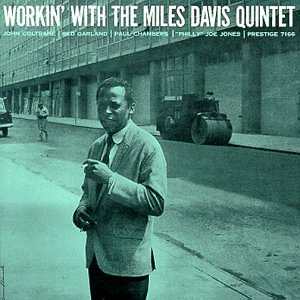
I find that first-quintet-era Miles Davis is about right. The music is generally not slow or boring, and that group (and its cousins) made a hell of a lot of recordings, so there's a lot of variety.

What do the Smokers do?

--Mr. Zero

  • Digg
  • Del.icio.us
  • StumbleUpon
  • Reddit
  • RSS

Fisking the Clark Letter: Ad Hominems, Character Assassination, Misleading Interpretations, and Unsubstantiated Political Alliances

In the New York Times story about the Synthese hullabaloo, it is mentioned that the philosopher Kelly James Clark of Calvin College wrote to Synthese in May of 2009 to complain about the Forrest article. In a comment on New APPS, Professor Clark has posted the letter in its entirety. It is unbelievably terrible.

[In order to avoid confusion, I have set blockquotes containing material from Clark's letter in boldface type, sections in which Clark quotes material from Forrest's article in italics, and left sections in which Forrest blockquotes someone else plain.]

Clark writes:

[I'm skipping the weird preamble]

Nonetheless, I can't believe that ad hominems (abusive and circumstantial) such as the following have any logical bearing on the author's argument:


What follows is supposed to be an example from the Forrest article of an abusive and circumstantial ad hominem argument:

Although he has been called a legal scholar (Wasley et al. 2006), he is neither a lawyer nor, properly speaking, a constitutional scholar. He lacks the requisite credentials and expertise, holding degrees in philosophy, religious apologetics, and a Master of Juridical Studies (M.J.S.) from the Washington University School of Law (the Discovery Institute financed Beckwith’s research for the M.J.S. with a $9000 fellowship) (Beckwith, n.d.). The M.J.S. “is designed for individuals in career fields who would benefit from limited legal training and do not require a professional degree…. [C]redit earned toward the MJS is not transferable to the JD program. It also does not qualify recipients to practice law” (WA Univ. School of Law 2005–2006, p. 23). Nonetheless, he presents his major pro-ID arguments in two law review articles (Beckwith 2003d,e) and a book, Law, Darwinism, and Public Education (Beckwith 2003b).


Here is what is going on in this much-discussed passage. Forrest points out that Beckwith has been called a legal scholar by Wasley et al., and then argues that because he lacks the relevant credentials Beckwith is, in fact, not to be legitimately regarded as a legal scholar. He's not a lawyer. He does not have a J.D or a license to practice law. He is not presently qualified to obtain such a license. He has a Master of Juridical Studies degree, whatever that is.

A lot of people find this discussion of Beckwith's credentials distasteful, because the focus should be on the quality of his arguments, not the academic degrees he does or does not hold. Although I am generally inclined to agree with this way of thinking about things--whatever problems there may be with, say, Kripke's views, the fact that he does not hold a Ph.D. in philosophy is not one of them--I am not convinced that a discussion of credentials is unwarranted in this particular case. (NB I am also not convinced that they are warranted; see below.)

Allow me to illustrate with a partially fictional example. Richard Dawkins discusses the cosmological argument for the existence of God in The God Delusion, and he has a perfect right to do so in spite of the fact that he has no advanced degree in philosophy and is not a "scholar" of philosophy. These facts about his credentials are not really relevant to assessing the quality of his writing on this topic; what is relevant is the (low) quality of his writings on this topic. But suppose that Dawkins had an MA in philosophy, and that he had been described as a "scholar of philosophy" on that basis. I think that such a thing would be silly and possibly worth remarking upon, especially if Dawkins's activism had public-policy-related consequences. Even more so if a political think-tank had paid his tuition for the philosophy MA. The suggestion by Clark and others that there is literally no possible way that any discussion of Beckwith's credentials could be relevant to any philosophical discussion is clearly false.

On the other hand, the Wasley, et al. 2006 reference is an article in the Chronicle of Higher Ed about Beckwith's tenure denial case, not a partisan attempt to use Beckwith's MJS to lend credibility to his views about the constitutionality of teaching ID as science. If there are places where partisans use Beckwith's MJS to lend credibility to his legal views, it would have been better to cite them instead of Wasley et al. It seems to me that this makes the passage in question less worthy of inclusion. Possibly unworthy of inclusion.

Such character assassination is beneath Synthese.


Having said all that, when I read this last thing, I thought to myself, ''Maybe I don't know what "character assassination" is supposed to be." So I looked it up. Wikipedia says that it's "an attempt to tarnish a person's reputation [that] may involve exaggeration, misleading half-truths, or manipulation of facts to present an untrue picture of the targeted person." Which is good, because that's what I thought it was. (Wikipedia goes on to point out that one of the most serious problems with character assassinations is that it can be difficult or impossible to undo the damage they cause. Once the insinuation is out there, it never fully goes away. You can't get the toothpaste back in the tube. This potential permanence of effect is why it's called a character assassination, instead of a character knuckle sandwich.)

It is obvious that this passage is not a character assassination. Maybe it's weird; maybe it was not worthy of inclusion in the article; maybe it is indicative of a nasty tone that has no place in the pages of Synthese. But it is not a use of exaggeration, misleading half-truths, or manipulation of facts designed to present an untrue picture of Beckwith. It says that Beckwith lacks credentials he in fact lacks.

The idea that Beckwith's good name will be forever unfairly tarnished by the fact that Forrest has accurately pointed out that he isn't a lawyer is absurd; the repeated claim that this represents a character assassination on Beckwith is itself a character assassination on Forrest.

[I'm skipping the discussion of red herrings.]

There are also misleading, and apparently obviously false interpretations of Beckwith's [sic] views:


Spoiler alert: the passage from Forrest that Clark is about to quote as his example of a misleading and "apparently obviously" (whatever that means) false interpretation of "Beckwith's" views does not contain any discussion of Beckwith's views whatsoever.

Dembski's desire to use his faith hegemonically predates his entry into the ID movement. His [that is, Dembski's] article, “Scientopoly: The Game of Scientism,” written for the Fall 1989–Winter 1990 Greek Orthodox journal Epiphany (a special anti-evolution issue), is in total alignment with Epiphany’s purpose:
To proclaim the …Gospel of Jesus in the contemporary world. To promote an … Orthodox Christian world view, based on the Holy Scriptures…as the salvific alternative to godless secularism. To provide the foundation for the restoration of a fully Christian way of life…To preserve the heritage …of traditional Christian culture …To defend the one, holy, catholic and apostolic Church …in an age of apostasy. (Epiphany 1989–1990)
Dembski interweaves the same strands here as in his later work: science provides knowledge, but theological knowledge trumps science. Modern science has become a weapon against theology; an example is Darwin’s theory of evolution, although “current evolutionists reject much of Darwin’s original formulation” (Dembski 1989– 1990, p. 112). Science ridicules God and rejects evidence of his activity in the natural order—miracles.


This is a discussion of Dembski, not Beckwith. OMG WTF.

Clark goes on:

I haven't read the Beckwith [sic] article but the title is about scientism not science. So the author's repeated use of the term "science" in her explication surely misrepresents Beckwith's [sic] views.


Read that again. Clark hasn't read the article mentioned in the passage. He hasn't looked closely enough to notice that the article is not even by Beckwith. But he's pretty sure based on the title of the article that Forrest is misrepresenting Beckwith's [sic] views. After all, the title doesn't even mention "science" and clearly indicates that the article is about a totally and entirely different topic. And that topic is something called "scientism."

Apparently it is obvious to Clark that there isn't any relationship between the institution of science and a view called "scientism" (which is the view that the scientific worldview is better than all the others). The author of an article about scientism would apparently obviously have no occasion to identify or discuss the nature of the institution of science. It is so apparently obvious that this would never happen that you don't even have to read the article, or even bother to correctly identify its author, before you write to the editors of Synthese to complain.

Then there's the suggestion of sinister plots, masquerading as logic or, what?, culture criticism:

Such sentiments reflect the alliance of some ID proponents with Christian Reconstructionism
(CR), also called “Theocratic Dominionism,” a far-right form of Christianity with repressive public policy goals.


Should a journal with your explicit aims publish unsubstantiated political alliances?


I checked. Forrest devotes several paragraphs to the substantiation of this political alliance. She connects various of Dembski's (not Beckwith; in this passage, as in the last one, she is discussing Dembski, not Beckwith) views about the proper role of Christianity in public life with those of CR, points out that certain CR honchos are also ID supporters, and that there are financial ties between the two groups. She cites sources.

I could go on, but read the text yourself and see if it lives up to the professed aims of your journal. I can see how this might be published in a rhetoric journal where the goal is to win whatever the cost. But I don't see how it could be published in a philosophy journal that despises sophistry, suggestion and fallacies.


The interesting thing about this passage is that it suggests that the Editors in Chief did not read this article they published and made no attempt to ascertain whether it lives up to the professed aims of the journal they edit they published it. Obviously, this may be true, but if it is true it means that the editors weren't doing their jobs. If this were true, it would be an egregious professional failing on their part. And if I were a recipient of a letter like this I would be deeply insulted by the insinuation.

Sincerely yours,

Kelly James Clark


I hope that when the EiCs received this letter, they threw it straight into the garbage where it belongs. I really hope that this letter did not cause the EiCs to rethink their position on the Forrest piece. I really, really hope that this kind of shit is not what convinced the EiCs to attach the disclaimer.

--Mr. Zero

  • Digg
  • Del.icio.us
  • StumbleUpon
  • Reddit
  • RSS

Synthese Editors in Chief Respond

Via New APPS, we learn that the editors in chief of Synthese have responded to Leiter's (it was the one Leiter created, right? There were so many...) petition. The response can be found here. It is not at all illuminating.

In the same New APPS post, we learn that Beckwith has also posted the response, and that the New York Times ran a story yesterday.

The way I look at it, there are a bunch of things that are pretty weird about this whole disclaimer thing. One of them is that the disclaimer is attached to material that they, the editors in chief themselves, accepted for publication. This strikes me as highly peculiar. Another is that they accepted the Forrest paper (in particular) for publication, sent it to the typesetter, published it, and then asked Forrest (in particular) to revise the paper. This seems to me to be a highly irregular order of operations. Another is that they attached the disclaimer even though they assured the guest editors more than just once that they were not going to attach any disclaimer.

One thing that the letter does clear up is the issue of the existence and nature of legal threats that may have led to the issuance of the disclaimer. The editors insist that there were no legal threats. So that's helpful. They then go on to say that they did receive messages that were not legal threats but which the editors take as seriously as legal threats. These messages did not come from Christian philosophers, though. And these challenges constrain them from answering questions on the blogs.

I don't know about you, but that seems cryptic to me. It does not seem forthright.

Another thing it clears up is where the idea for Beckwith to respond came from: Beckwith. But that's no mystery. What would be interesting to hear about is where the idea for a disclaimer came from, but on that there is no word.

They also indicate that there were problems with the language of two papers, but not which two. They indicate that they corresponded with Forrest but there is no indication that they corresponded with a second author.

Finally, the weirdest thing is where they explain that they "were unable to properly communicate later stages of [their] decision-making process to the guest-editors." They say that were pretty good about communicating the early stages of their decision making with the guest editors, but not so much with the later stages. Of course, the early stages were where they were disinclined to issue the disclaimer, and (to hear the guest editors tell it) the communications about the early stages seem to have been disguised as a communication of a final decision, and the later stages were where they changed their minds and decided to issue the disclaimer.

On its face, I have no idea what they could possibly mean here. When you say 'unable,' that makes it sound like you lack the ability to do something. If you had the ability but failed to exercise it, you say you failed, not that you were unable. But then they say that what they were unable to do was to properly communicate with the guest editors. The use of 'properly' there makes it seem like they think there was something improper about the way they didn't communicate with the guest editors. But if that's right, they should apologize for having done something improper--especially since this is a response to a petition that calls on them to apologize for exactly that. And now I feel like I'm parsing the sentence entirely too carefully. So I'm not at all sure what to make of it.

And there's no indication of why they changed their minds and decided to issue the disclaimer or anything, either.

--Mr. Zero

  • Digg
  • Del.icio.us
  • StumbleUpon
  • Reddit
  • RSS

Crowd sourcing peer review? Free open access?

Anonymous brings this to our attention:

http://www.sympoze.com/

The idea is to create an open-access online philosophy journal (and then journals in other disciplines), with the peer review process crowd sourced. As many reviewers as want to read a paper can vote to accept/reject, with brief comments. Accepted papers will immediately be published online.

From what I can see, the open access will be free for authors. They are now recruiting reviewers.

Interesting idea.

Whaddaya think?

~zombie

  • Digg
  • Del.icio.us
  • StumbleUpon
  • Reddit
  • RSS

Bad boys, bad boys, whatcha gonna do?

Regarding the Synthese kerfuffle, Anonymous wrote:

I don't know how seriously I can take all this, given the background of the atrociously bad editorial practices I suspect most journals really engage in... So the Synthese editors engaged in what seems to be bad editorial behavior. But until I have reason to believe they alone among top journals behave in this way, why shame them?
One thing the Synthese editors did, it seems, is publish Beckwith's 23 page reponse without peer review. This is based on the fact that it was received and accepted on the same day, Feb 7. This is Synthese's editorial policy:
Synthese follows a double−blind reviewing procedure. Authors are therefore requested not to include their name or affiliation in their submitted papers. Self−identifying citations and references in the article text should be avoided. Authors should thus make sure that their names and/or affiliations are NOT mentioned on any of the manuscript pages. If authors do include their names on submitted papers, anonymous reviewing cannot be guaranteed.
Obviously, Beckwith's response could not be double-blinded, since he refers to himself continuously throughout the essay. And there are fully two pages of references in which he cites his own work. And he put his own name in the keywords. But that the diatribe could not be blind-reviewed does not mean it should not be subject to peer review at all... or does it? He also in places dismissively refers to Barbara Forrest as "Ms. Forrest" rather than Dr. or Professor Forrest. And he writes this:
My task of responding is made more difficult by the fact that Forrest’s 49-page article is at many points nearly incomprehensible. She cites, quotes from, and misrepresents works of mine published over a 23 year period, from when I was 24 years-old until the age of 47 (I am presently 50); she compares and contrasts works, composed sometimes decades apart, that are dealing with different issues in different disciplines at different levels of abstraction and written for diverse audiences, including professional philosophers, theologians, legal scholars, Christian lay persons, etc.; and she often writes longish paragraphs that include a lot of controversial assertions that she presents as uncontested truths, and quotes from assorted writers whose work she often misunderstands or misrepresents, but with no actual arguments (or at least none that one can immediately recognize).
There really is no easy way to remedy this problem, though it is, happily, not my problem. It is Forrest’s. I have no obligation to provide clarity, rigor, and coherence to an article that lacks all three and that I did not author.
Which is to say, to remedy the allegedly problematic "tone" of Forrest's paper, Synthese published, without peer review, a piece that is essentially a dismissive ad hominem. (Which makes me suspect more and more that there is more at play here than just the ID controversy. There is also really and truly sexism.)

So it strikes me that the editors of Synthese are guilty of all kinds of editorial malfeasance here.

But to return to Anonymous's comment. Is this just par for the course? Are all journals this "atrociously" bad? This strikes me as unlikely, because if it happened all the time, we would either be hearing about it more often, or the Synthese thing wouldn't have turned into such a big deal and we could all go back to chewing our cud in peace and quiet.

Open discussion: Is this normal? What kinds of editorial misconduct have you encountered personally (or know about from a reliable source)?

~zombie

  • Digg
  • Del.icio.us
  • StumbleUpon
  • Reddit
  • RSS

More On The Synthese Controversy

There are several online petitions:

This one calls on the editors of Synthese to grant Forrest space in the journal to respond to Beckwith's piece.

This one calls on the editors of Synthese to explain the circumstances surrounding the publication of the Beckwith piece.

The idea here is that Beckwith's article was accepted the day it was submitted and appears not to have been edited for content or tone by the EiCs of Synthese. (And its tone is really, really heinously, brutally condescending. It has been suggested, and I am sympathetic to this idea, that Beckwith's piece is an instance of this sort of criticism--one so global and all-encompassing that it is not possible to respond effectively. Consider, for example, that the title of Beckwith's piece is "Or We Could Be Philosophers," which suggests falsely that being a philosopher is a genuine alternative to whatever Forrest was doing.)

This one objects much more strongly to the conduct of the Editors-in-chief, asking them to both apologize for and retract the disclaimer, and to "[d]isclose the nature of complaints and/or legal threats from Francis Beckwith, his supporters, and supporters of Intelligent Design that were received by the Editors-in-Chief after the on-line publication of "Evolution and Its Rivals" last year."

The idea here is that (as John Protevi says here) there is an "extremely high probability that the next time Professor Forrest testifies to the LA state legislature (as she often does in these matters, and no doubt will soon in the debate on SB 70, which would repeal the stealth creationist Lousiana Science Education Act or LSEA), some ID partisan will claim she has been "refuted" in the pages of a prestigious philosophy journal and that therefore her testimony should be discounted if not ignored."

Regarding this last one, Mark Lance, in comments here, writes:

We are told publicly that there were general objections to the tone of multiple articles, and that this prompted the disclaimer. But then only Beckwith is given an (apparently unrefereed, and unedited) opportunity to publish a rejoinder. Whatever the intent behind any of this, (a) it is hard to see why mere issues of tone would justify a special opportunity to respond, (b) hard to see in any case why others challenged in the special issue weren't as well given the opportunity to respond and (c) hard to see why oversight was not exercised regarding tone and misuse of the disclaimer in Beckwith's article.


Apart from the petitions, there has been some interesting commentary. For example, in comments here, Alex Malpass writes,

I am a guest editor of a forthcoming issue of Synthese [...] As far as I understand, there is no controversy surrounding our issue.

If the calls for a Synthese boycott (or a Synthese-special-issue-boycott) were heeded by the philosophical community, then we (i.e. myself, my co-editor, and each of the 6 contributors to the issue, none of whom are involved with the ongoing controversy) would be the ones to suffer.

I'm not a philosopher of morality, but would imagine it would be hard to justify why those associated with my issue should be so penalised.

I would like to simply request that those people calling for a boycott reflect upon the potential impact on us 'civilians' that would be the result.


How short-sighted can a person be? This is a controversy about how Synthese treats its guest editors. Malpass, his co-editor, and his six contributors should be first in line to participate in this boycott. They should be unable to contain themselves at the very thought of this boycott, because they are the ones who stand to be affected by these editorial shenanigans. It doesn't matter if there is no controversy surrounding their issue, it matters what editorial policies are in place in the event of controversy. And if I were a guest-editor I would be terrified, because (if the past is any indication) the EiCs would not tell me about the controversy if it existed; the EiCs would turn their backs on me and by disclaiming my issue; and they would lie to me about what they were doing. If I were guest-editing a special issue of Synthese, I would be much more worried about what the editors of Synthse were going to do to me than about the effects of a boycott.

In comments here, Philippe Huneman writes:

The allegation of professional misconduct – having published the disclaimer without either mentioning it to the guest eds. or having obtained their permission to include it , would not be regarded as so horrible, and I am sure, would not have led to any kind of call for a boycott if we had been in a context other than evolution and ID. In fact, if such actions had been denounced in another context as professional misconduct, someone would have raised their voice to say that we should give the EiC the benefit of the doubt and ask to have the full transcript of the interactions between them and guest eds. made explicit before making any further judgment. However, when someone condemns the disclaimer as a concession to Evil (ID), then of course many people will be horrified and incited to protest.


This gets the allegation of misconduct wrong. It ignores the crucial detail that the EiCs didn't just publish the disclaimer without notice; they published the disclaimer after twice giving an assurance that they were not going to publish any disclaimer. And that is misconduct no matter why they did it.

And it's not as though nobody has asked for the EiCs to explain their side. It's just that their "explanation" completely sidestepped all the important issues. And it is worth mentioning that the EiCs have not disputed any of the pertinent facts, except to deny that the disclaimer was the result of pressure from the ID movement. But they have not denied, for example, that they were subject to pressure by the ID movement, or that they gave assurances that they would not disclaim the issue.

He goes on:

So, in the event that some papers to be published in a guest-edited volume transgress the boundaries of academic politesse, what options do those who are ultimately responsible for the publication have for maintaining it? Notice that whatever action is taken, -- not to accept the papers , to write a disclaimer, or whatever - the disapprobation faced will be the same. Some people in the blogs recently said that the EiCs should not have accepted the papers, and that they did so was already indicative of their professional misconduct. But what if they had actually refused to accept them? Wouldn’t it have led to the same or an even more harsh campaign against them, with the same accusations of their having made concessions to ID people raised?


For crying out loud. The editors might have used the new-fangled and controversial tool known as the "conditional acceptance." If the EiCs thought the tone of any of the submissions was inappropriate, they should have said, "we will accept this only if you tone it down." Crisis averted.

Lastly, am I the only one who thinks it strange that Synthese would devote a guest-edited special issue to the topic "Evolution and its Rivals"? Because evolution has no rivals.

--Mr. Zero

  • Digg
  • Del.icio.us
  • StumbleUpon
  • Reddit
  • RSS